onkyo tx nr626 manual
Onkyo TX-NR626 Manual: A Comprehensive Guide
This guide details the Onkyo TX-NR626 AV receiver, offering instructions, specifications, and troubleshooting. Downloadable manuals in PDF format are readily available online.
The Onkyo TX-NR626 is a versatile 7.2-channel network AV receiver designed to deliver a captivating home theater experience. This receiver supports the latest audio-visual technologies, including Dolby Atmos and DTS:X, enabling immersive 3D soundscapes. It’s a popular choice for users seeking a balance between performance and affordability.
Numerous resources are available to help users understand and operate the TX-NR626 effectively. Official Onkyo provides comprehensive instruction manuals in PDF format, accessible for download. These manuals cover everything from initial setup and speaker configuration to advanced features and troubleshooting. Online communities and support websites also offer valuable assistance and frequently asked questions, ensuring a smooth user experience with this powerful receiver.
Key Features and Specifications
The Onkyo TX-NR626 boasts a robust feature set, including 7.2 channel surround sound and support for 4K/60Hz video. It delivers 100W per channel, providing ample power for most home theater setups. Key specifications include HDMI 2.0a connectivity with HDCP 2.2, ensuring compatibility with the latest 4K Ultra HD devices.
Network connectivity is a highlight, offering Wi-Fi, Bluetooth, and Ethernet for streaming music and internet radio. The receiver supports high-resolution audio formats and features Dolby Atmos and DTS:X decoding for immersive sound. The manual details these specifications, alongside information on power consumption, dimensions, and supported audio/video codecs, providing a complete overview of the receiver’s capabilities.

Setting Up Your Onkyo TX-NR626
Proper setup involves unboxing, connecting speakers, and source devices via HDMI or optical inputs. The manual guides users through each step for optimal performance.
Unboxing and Initial Connections
Carefully unpack your Onkyo TX-NR626, ensuring all components are present. These typically include the receiver itself, a remote control, speaker wires, an FM antenna, and documentation – crucially, the instruction manual. Before powering on, connect the provided power cord securely.
Initial connections focus on the display and audio outputs. Connect your TV or projector using an HDMI cable to one of the receiver’s HDMI outputs (typically labeled “OUT ARC” for Audio Return Channel). This enables audio from the TV to be sent back to the receiver.
Next, connect your source devices (Blu-ray player, gaming console, etc.) to the HDMI inputs on the rear panel. Refer to the manual for optimal input assignments. Ensure all cables are firmly seated for a stable connection. Finally, consult the manual for grounding instructions to minimize potential noise.
Speaker Configuration and Calibration
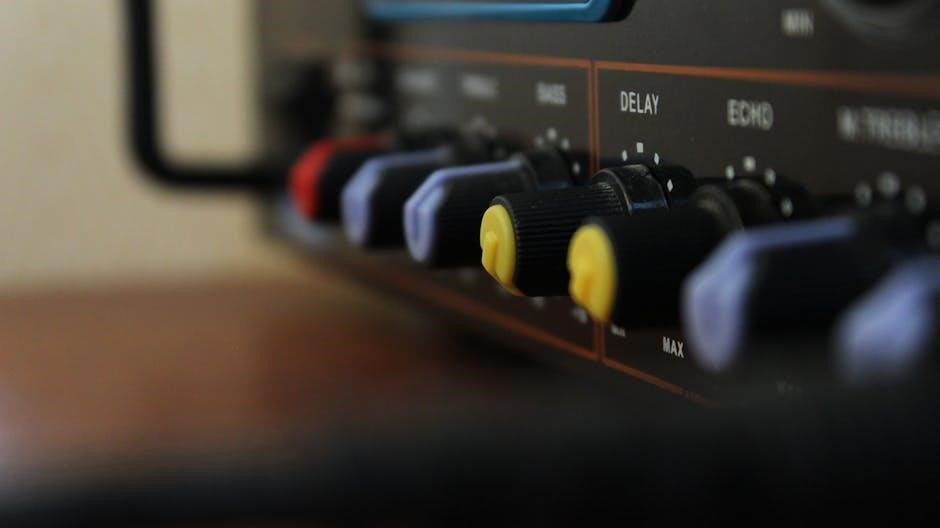
Proper speaker configuration is vital for optimal sound. Begin by connecting your speakers to the corresponding terminals on the rear panel, observing correct polarity (+/-). The Onkyo TX-NR626 supports various configurations, including 5.1, 7.1, and Dolby Atmos setups. Consult the manual for wiring diagrams specific to your chosen layout.
Once connected, utilize the receiver’s built-in Audyssey MultEQ calibration system. This automated process analyzes your room’s acoustics and adjusts speaker levels and equalization for the best possible sound. Place the included microphone at multiple listening positions as instructed by the on-screen prompts.
The manual details the Audyssey setup process thoroughly. After calibration, review the speaker settings to confirm accuracy and make any necessary manual adjustments.
Connecting Source Devices (HDMI, Optical, etc.)
The Onkyo TX-NR626 offers multiple input options for connecting your devices. Utilize the HDMI inputs for Blu-ray players, gaming consoles, and streaming devices to benefit from high-definition video and audio. Ensure you use HDMI cables that support HDCP 2.2 for 4K content.
Optical digital audio inputs are suitable for devices lacking HDMI, such as older TVs or CD players. Coaxial digital audio input is another alternative. For analog connections, use the RCA audio inputs for legacy devices.
The manual provides detailed diagrams illustrating the rear panel connections. Remember to select the correct input source on the receiver using the front panel controls or remote.
Understanding the Onkyo TX-NR626 Interface
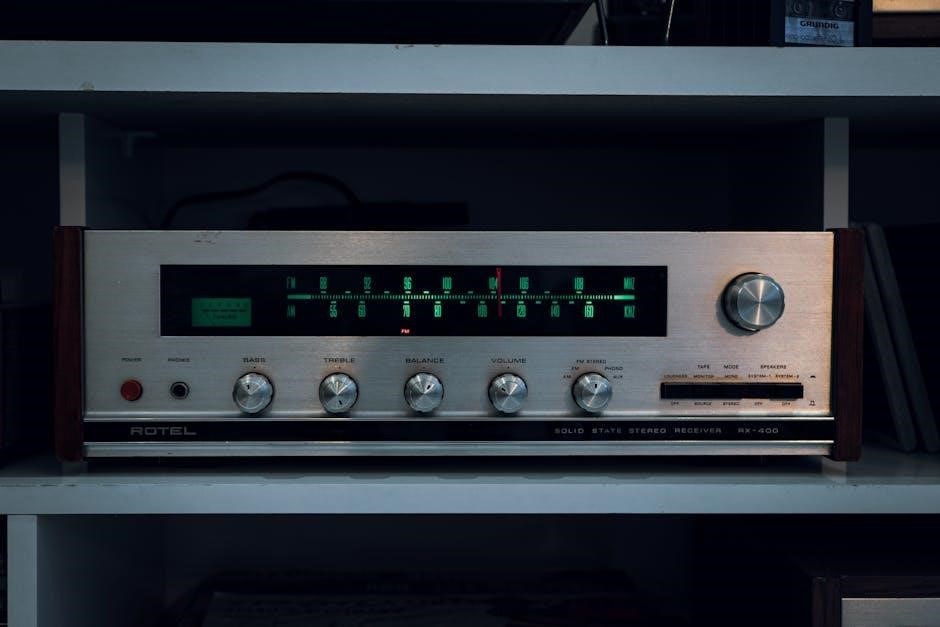
Navigating the TX-NR626 involves the front panel, remote control, and on-screen menu. These elements provide access to settings and functionalities.
Front Panel Controls and Display
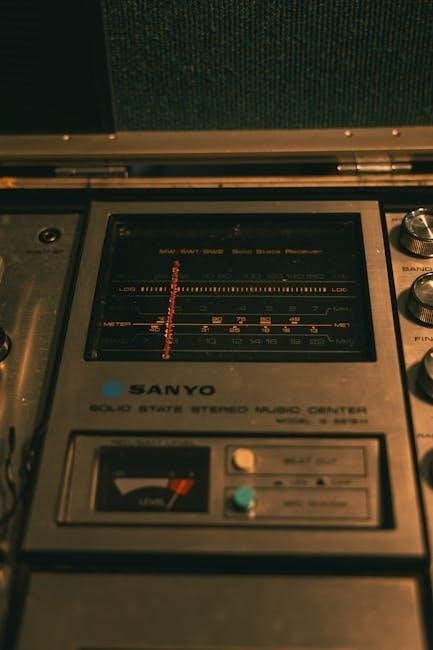
The Onkyo TX-NR626’s front panel provides essential controls for immediate operation. Key buttons include power, input selection, volume adjustment, and function controls for various audio modes. The display screen offers vital information regarding the current input source, selected audio format (Dolby Atmos, DTS:X, etc.), and receiver status.
The display’s brightness is adjustable to suit ambient lighting conditions. Users can cycle through inputs directly on the front panel, simplifying source switching. Furthermore, the panel often features a setup button initiating the speaker configuration and calibration process. Understanding the icons and messages displayed is crucial for efficient operation and troubleshooting. The intuitive layout ensures ease of use, even without referencing the full manual.
Remote Control Functions
The Onkyo TX-NR626’s remote control unlocks the receiver’s full potential, offering comprehensive control over all features. Beyond basic operations like power, volume, and input selection, it provides direct access to audio settings, surround modes (Dolby Atmos, DTS:X), and network functions. Dedicated buttons streamline navigation through the on-screen menu system.
The remote facilitates Zone 2/multi-room audio control, allowing independent source and volume adjustments. It also includes preset buttons for quick access to favorite radio stations or input sources. Learning the remote’s layout and functions significantly enhances the user experience. Proper battery installation and avoiding obstructions are essential for reliable operation. A lost remote can be partially mitigated by using the Onkyo Controller app.
On-Screen Menu Navigation
The Onkyo TX-NR626 utilizes a user-friendly on-screen menu system, accessible via the receiver’s front panel or remote control. Navigation is typically achieved using the directional arrows and the ‘Enter’ button to confirm selections. The menu is logically organized into sections covering setup, audio settings, video settings, network configuration, and system information.
Within each section, submenus provide granular control over specific parameters. Users can adjust speaker levels, crossover frequencies, equalization settings, and HDMI input assignments. The menu also displays current settings and provides helpful tooltips. Familiarizing yourself with the menu structure is crucial for optimizing the receiver’s performance and customizing it to your preferences. The visual interface enhances ease of use.
Advanced Features and Settings
Explore network connectivity, Dolby Atmos/DTS:X configuration, and Zone 2/multi-room audio options within the TX-NR626’s settings for enhanced customization.
Network Connectivity and Streaming
The Onkyo TX-NR626 boasts robust network connectivity options, enabling seamless access to a world of streaming content. Connect via Wi-Fi or Ethernet to enjoy services like Spotify, Pandora, and TuneIn Radio. The receiver supports network streaming of high-resolution audio files, including FLAC and DSD, for audiophile-grade listening experiences.
Configuration is straightforward through the on-screen menu. You’ll need to enter your network credentials to establish a connection. Once connected, explore the network section to discover available streaming services and internet radio stations. The TX-NR626 also supports firmware updates via the network, ensuring your receiver always has the latest features and improvements. Regularly checking for updates is recommended for optimal performance and compatibility.
Furthermore, the receiver is capable of playing digital music files stored on networked computers or NAS devices.
Dolby Atmos and DTS:X Configuration
The Onkyo TX-NR626 delivers immersive surround sound through Dolby Atmos and DTS:X decoding. Proper configuration is crucial to unlock the full potential of these technologies; Begin by ensuring your speaker setup is compatible – typically a 5.1.2 or 7.1.2 configuration is recommended for optimal Atmos/DTS:X experiences.
Access the speaker setup menu to assign height channels to your upfiring or in-ceiling speakers. The receiver’s auto-calibration system can assist in optimizing speaker levels and distances, but manual adjustments may be necessary for fine-tuning. Ensure the correct input signal is selected for Atmos/DTS:X content – typically a bitstream output is required.
Experiment with different speaker layouts and settings to achieve the most immersive and balanced soundstage. Refer to the manual for detailed guidance on speaker placement and calibration procedures.
Zone 2/Multi-Room Audio Setup

The Onkyo TX-NR626 allows for independent audio playback in a second zone (Zone 2), expanding your listening experience beyond the main room. This feature requires a compatible speaker setup connected to the Zone 2 outputs on the receiver.
Access the Zone 2 settings within the on-screen menu to configure the audio source and volume control. You can select a different input source for Zone 2 than the main zone, enabling simultaneous playback of different content. Power amplification for Zone 2 speakers is typically provided by the receiver’s internal amplifiers.
Consider using the receiver’s app for convenient control of Zone 2 playback; Explore options for synchronizing or independently controlling audio in both zones to create a customized multi-room audio system.
Troubleshooting Common Issues
Resolve typical problems like no sound, HDMI connectivity, or network issues with this section’s guidance. Consult the manual for detailed solutions and support.
No Sound Output
If you experience no sound from your Onkyo TX-NR626, several factors could be at play. First, verify the volume level on both the receiver and the connected source device. Ensure the correct input source is selected on the receiver using the front panel controls or remote.
Check speaker connections, confirming they are securely attached to the appropriate terminals and that speaker wires aren’t damaged. Verify the receiver isn’t muted.
Examine the audio settings within the Onkyo’s on-screen menu. Ensure the speaker configuration matches your setup (e.g., 5.1, 7.1). Try different audio decoding modes (Dolby Digital, DTS) to see if one resolves the issue. If using HDMI, confirm the HDMI cable is functioning correctly and supports audio transmission. Finally, consult the comprehensive manual for advanced troubleshooting steps and diagrams.
HDMI Connection Problems
Experiencing HDMI issues with your Onkyo TX-NR626? Begin by ensuring the HDMI cable is securely connected to both the receiver and the source device (Blu-ray player, game console, etc.). Try a different HDMI cable to rule out a faulty connection. Confirm the source device’s HDMI output resolution is compatible with the receiver – sometimes adjusting this setting resolves the problem.
Within the Onkyo’s on-screen menu, navigate to the HDMI settings and verify the correct HDMI input is selected. Try different HDMI ports on the receiver.
If the issue persists, check for firmware updates for both the receiver and the source device. A dated firmware can cause compatibility problems. Refer to the Onkyo TX-NR626 manual for detailed HDMI troubleshooting steps and supported resolutions.
Network Connectivity Issues
Troubleshooting network problems with your Onkyo TX-NR626? First, verify your home network is functioning correctly – can other devices connect to the internet? Ensure the receiver is within range of your Wi-Fi router, or consider using a wired Ethernet connection for a more stable link.
Access the Onkyo’s network settings through the on-screen menu. Confirm the correct Wi-Fi network is selected and the password entered accurately. Try restarting both the receiver and your router.
Check the receiver’s IP address and DNS settings; automatic configuration is usually best, but manual settings might be necessary in some cases. Consult the Onkyo TX-NR626 manual for specific network configuration instructions and troubleshooting tips.
Resources and Support
Find the latest firmware, official Onkyo support, and frequently asked questions (FAQ) online. Downloadable manuals and user guides are also available.
Downloading the Latest Firmware
Keeping your Onkyo TX-NR626’s firmware up-to-date is crucial for optimal performance and access to the newest features. Regularly check the official Onkyo support website for available updates. Firmware updates often address bugs, improve compatibility with new devices, and enhance overall system stability.
The process typically involves downloading the firmware file to your computer, then transferring it to a USB flash drive. Ensure the USB drive is formatted correctly (usually FAT32). Follow the on-screen instructions on your TX-NR626 to initiate the update process through the receiver’s setup menu. It’s vital not to interrupt the update process, as this could potentially damage the receiver. Always refer to the detailed instructions provided with the firmware download for specific guidance. A successful update will improve your listening experience.
Official Onkyo Support Website
The official Onkyo support website is your primary resource for all things related to your TX-NR626 receiver. Here, you’ll find a wealth of information, including downloadable manuals in multiple languages, frequently asked questions (FAQs), and troubleshooting guides. You can also access the latest firmware updates to ensure your receiver is running at its best.
The website allows you to search for specific information or browse by product model. Directly contacting Onkyo support is also possible through the website, offering assistance with more complex issues. Registration of your TX-NR626 may be required to access certain features or support options. The Onkyo website is a valuable tool for maximizing your enjoyment of your home theater system and resolving any potential problems.
Frequently Asked Questions (FAQ)
Many common questions regarding the Onkyo TX-NR626 are addressed in readily available FAQs. These cover topics like initial setup, HDMI connectivity issues, network configuration, and troubleshooting sound problems. Users frequently inquire about Dolby Atmos and DTS:X setup, Zone 2 audio configuration, and firmware update procedures.
The FAQs often provide step-by-step instructions and visual aids to help resolve issues quickly. Searching online forums and Onkyo’s official support website will reveal solutions to frequently encountered problems. Common concerns include no sound output, difficulties pairing Bluetooth devices, and understanding the on-screen menu navigation. Consulting these resources can save time and effort before contacting customer support directly.