winnebago fuse box diagram pdf
Winnebago Fuse Box Diagram PDF: A Comprehensive Guide
Navigating Winnebago’s electrical systems requires accessible diagrams; locating a 1990 Superchief’s fuse panel proves challenging, yet crucial for installations like tachometers, demanding battery voltage.
Winnebago RVs, renowned for their comfort and convenience, rely on complex electrical systems powering everything from lighting and appliances to entertainment and climate control. Understanding these systems is paramount for owners, especially when undertaking modifications or troubleshooting issues. A core component of this understanding lies in accessing and interpreting the Winnebago fuse box diagram PDF. These diagrams detail the location of fuse panels and the specific circuits each fuse protects.
However, locating these diagrams, particularly for older models like the 1990 Superchief, can be surprisingly difficult. Online resources are often limited, and manufacturer documentation may be scarce. The need for a diagram arises frequently when installing aftermarket accessories, such as a tachometer requiring a dedicated battery voltage source. Successfully integrating these additions demands identifying appropriate wiring harnesses and ensuring proper fuse protection. The challenge highlights the importance of diligent searching and potentially consulting Winnebago owner communities for assistance.
Understanding Fuse Box Locations
Locating the fuse box(es) within a Winnebago RV is the first step in any electrical investigation or modification. Unlike automotive systems with a single, centralized location, Winnebago often distributes fuses across multiple panels. These can be found in various locations, including near the house batteries, within the converter compartment, and sometimes even integrated into the chassis electrical system.
The specific placement varies significantly depending on the chassis – Chevrolet, Ford, or Dodge – and the model year. For a 1990 Winnebago Superchief, pinpointing the exact locations requires careful searching. Owners often report difficulty finding comprehensive documentation. Knowing the chassis type is crucial, as each manufacturer utilizes different fuse box layouts. Furthermore, aftermarket installations may introduce additional fuse panels, adding to the complexity. A detailed fuse box diagram PDF is essential to accurately identify each panel and its corresponding circuits.
Identifying Common Winnebago Chassis
Winnebago RVs are built on a variety of chassis, most commonly Chevrolet, Ford, and Dodge. Identifying the chassis is paramount when seeking a correct fuse box diagram PDF, as electrical systems differ significantly between manufacturers. The chassis year also plays a vital role, influencing fuse panel layouts and wiring schemes.
For older models like the 1990 Winnebago Superchief, determining the chassis often requires checking the vehicle’s title or the original build sheet. Each chassis manufacturer employs unique fuse designations and locations. A Chevrolet chassis will have a different fuse box setup than a Ford or Dodge. Knowing this distinction is critical for accurate troubleshooting and aftermarket accessory installation. Resources often mention the difficulty in locating specific diagrams, highlighting the importance of precise chassis identification before searching for relevant documentation.
Chevrolet Chassis Fuse Diagrams
Locating Chevrolet chassis fuse diagrams for Winnebago RVs can be challenging, particularly for older models. These diagrams typically detail the location of fuse boxes – often found under the dashboard, in the engine compartment, and sometimes near the house batteries. Chevrolet utilizes various fuse types, including blade fuses and cartridge fuses, each serving different circuits.
Information suggests that finding a direct match for a Winnebago’s modified Chevrolet chassis can be difficult; diagrams for standard Chevrolet trucks of the same year may offer a starting point, but expect discrepancies. Common circuits protected include headlights, windshield wipers, power windows, and the vehicle’s charging system. Online forums and Winnebago owner groups are valuable resources, as members often share scanned diagrams or offer insights into specific fuse locations. Remember to verify the diagram’s applicability to your exact model year.
Ford Chassis Fuse Diagrams
Ford chassis in Winnebago RVs present a similar challenge when seeking fuse diagrams. Typically, Ford fuse boxes are situated under the hood, inside the vehicle cabin (often under the dashboard or kick panel), and potentially near the house battery compartment. Diagrams will illustrate fuse locations for systems like the engine, transmission, lights, and auxiliary functions.
Like Chevrolet, Winnebago’s modifications to the Ford chassis mean a standard Ford truck diagram won’t be a perfect match. Expect variations due to added RV components. Online resources, including Ford truck forums and Winnebago-specific communities, can be invaluable. Look for diagrams referencing the specific Ford chassis code used in your RV. Common fuses protect circuits for power windows, radio, and the vehicle’s ignition system. Always double-check the diagram’s year and chassis specifics for accuracy.
Dodge Chassis Fuse Diagrams
Dodge chassis, though less common in older Winnebago models like the 1990 Superchief, still require specific fuse box information. Dodge fuse panels are generally found in similar locations to Ford and Chevrolet – under the hood, within the cabin, and near battery systems. Locating a precise diagram for a Winnebago-modified Dodge chassis can be particularly difficult.
Standard Dodge truck diagrams will offer a starting point, but anticipate differences due to Winnebago’s RV-specific wiring. Focus on identifying the chassis year and engine type, as these details are crucial for finding a relevant diagram. Online Dodge truck forums and dedicated RV communities are excellent resources. Expect to find fuses protecting systems like the headlights, windshield wipers, and the vehicle’s electrical accessories. Remember to verify the diagram’s accuracy against your RV’s specific configuration.
Decoding Winnebago Fuse Box Labels
Winnebago fuse box labels, while intended to simplify identification, can often be cryptic or faded with age. Common abbreviations and codes are frequently used, requiring careful interpretation. “Lights” might cover interior, exterior, or marker lights, while “Aux” could indicate auxiliary power outlets or accessories. Understanding these conventions is vital for accurate troubleshooting.
Labels may also reference specific Winnebago systems, like the “HWH” leveling system or the “Inverter” for converting DC to AC power. A systematic approach is key: cross-reference the label with the fuse diagram (if available) and test each fuse individually. If labels are illegible, carefully document the fuse amperage and location before replacement. Online Winnebago forums often contain user-submitted label translations and diagrams, offering valuable assistance.
Accessing Winnebago Fuse Box Diagrams Online

Locating Winnebago fuse box diagrams online can be surprisingly difficult, particularly for older models like the 1990 Superchief. Official Winnebago documentation is sometimes limited, but several resources offer potential solutions. Online RV forums, such as iRV2.com and Winnebago Owners Forum, are invaluable for crowdsourced information and shared diagrams.
Web searches using specific keywords – “Winnebago Superchief fuse diagram,” “1990 Winnebago electrical schematic,” or the chassis type (Chevrolet, Ford, Dodge) – can yield results. While a direct match may be elusive, diagrams for similar year and chassis models can provide helpful insights. Be cautious about unofficial sources and verify information before implementing any electrical repairs. Printable diagrams are often shared as PDF files within these communities.
Specific Winnebago Model Fuse Diagrams
Finding diagrams tailored to the Winnebago Superchief (1990) presents a unique challenge due to its age. Direct, readily available PDFs are scarce. However, resourceful owners have shared limited fuse assignments within online forums. These often detail specific fuses and their corresponding circuits, aiding in troubleshooting and accessory installation.

Information gleaned from related chassis diagrams – Chevrolet being common for that era – can supplement the Superchief-specific data. Remember that Winnebago often customized wiring, so chassis diagrams aren’t always a perfect match. A 2024 Tiffin Sprinter fuse assignment was found as a reference, though not a direct diagram. Patience and cross-referencing are key when piecing together the electrical layout for this vintage model.
Winnebago Superchief (1990) Fuse Box Information
Locating a dedicated fuse box diagram for the 1990 Winnebago Superchief proves exceptionally difficult. Online resources are limited, requiring a piecemeal approach to understanding its electrical system. Owners frequently report a lack of comprehensive documentation, necessitating reliance on community-shared information and chassis-specific diagrams.
The Superchief often utilized a Chevrolet chassis, making Chevrolet fuse diagrams a valuable starting point, though modifications by Winnebago are common. Identifying the specific chassis year is crucial for accurate referencing. Expect to cross-reference information and potentially trace circuits manually. Forum discussions suggest focusing on battery voltage circuits for accessory power, like a tachometer installation, as a primary troubleshooting area. Patience and methodical investigation are essential.
Fuse Types Used in Winnebago RVs
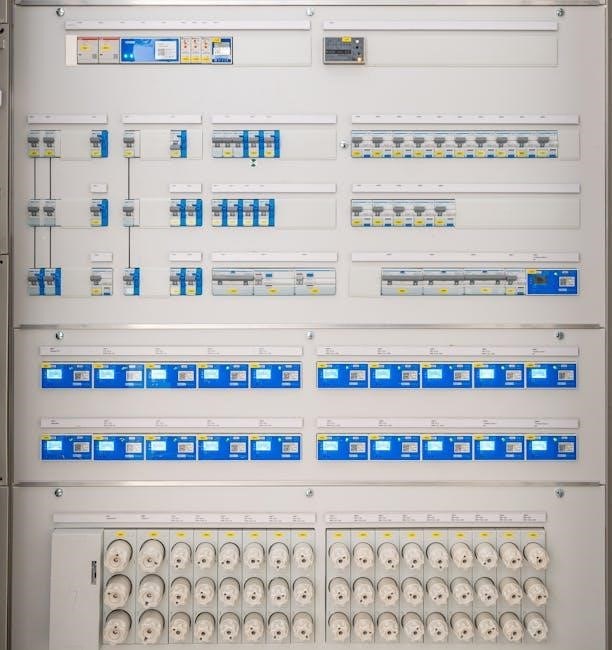
Winnebago RVs, including the Superchief, historically employed a variety of fuse types, demanding careful identification during troubleshooting or replacement. Common types include glass tube fuses, often found in older models like the 1990 Superchief, and more modern blade-style (ATO/ATC) fuses. Understanding amperage ratings is critical; mismatched fuses can lead to electrical damage or fire hazards.
Circuit breakers are also frequently integrated into Winnebago’s electrical systems, providing resettable protection. Identifying the fuse box location and the specific fuse type used for each circuit is paramount. Diagrams, when available, will specify the amperage and type. Always replace a blown fuse with one of the exact same rating. Utilizing incorrect fuses voids warranties and compromises safety.
Tools Needed for Fuse Box Troubleshooting
Effective troubleshooting of a Winnebago RV’s electrical system, particularly when referencing a fuse box diagram, necessitates a specific toolkit. A fundamental requirement is a multimeter, essential for verifying voltage and continuity. A fuse puller, often a small plastic tool, simplifies safe fuse removal without damaging the fuse box. Test lights offer a quick check for power presence, though less precise than a multimeter.
Additionally, a set of screwdrivers (Phillips and flathead) is needed to access fuse box covers and components. A wiring diagram (alongside the fuse box diagram) provides circuit tracing capabilities. Having replacement fuses of various amperage ratings on hand is crucial for immediate repairs. Finally, a flashlight or headlamp illuminates dimly lit fuse box locations, aiding visual inspection and identification.
Common Electrical Issues & Fuse Causes
Frequently encountered electrical problems in Winnebago RVs often trace back to blown fuses. Battery voltage issues, such as a consistently low reading, can indicate a faulty fuse protecting the battery circuit or charging system. Accessory power problems – lights, the radio, or appliances failing – frequently stem from a blown fuse dedicated to that specific accessory.
Overloaded circuits, caused by running too many appliances simultaneously, are a common fuse-blowing culprit. Short circuits, resulting from damaged wiring, create a sudden surge, instantly tripping the fuse. Corrosion within the fuse box or on fuse terminals can also lead to intermittent electrical failures. Identifying the affected circuit using a fuse box diagram is the first step in diagnosing and resolving these issues, ensuring safe and reliable operation.
Battery Voltage Issues & Fuses
Low battery voltage in a Winnebago RV frequently points to a problem within the charging system or the battery itself, often linked to specific fuses. A blown fuse protecting the converter – the device that charges the batteries from shore power – will prevent battery charging, leading to voltage drop. Similarly, a fuse dedicated to the alternator’s charging circuit, if blown, will halt battery charging while driving.
Investigating these issues requires a Winnebago fuse box diagram to pinpoint the relevant fuses. Check fuses related to the converter, alternator, and battery charging system. A consistently blown fuse suggests a short circuit or overload in that circuit, demanding further investigation of the wiring and connected components. Regular fuse checks are crucial for maintaining optimal battery health and preventing unexpected power loss.
Accessory Power Problems & Fuses
When accessories – lights, the radio, or a newly installed tachometer – fail to operate in a Winnebago RV, the first step is checking the corresponding fuses. Accessory circuits are often protected by numerous fuses, categorized by function or zone within the RV. A blown fuse indicates an overload or short circuit within that specific accessory or its wiring.
A Winnebago fuse box diagram is essential for identifying the correct fuse for each accessory; The diagram will reveal which fuse controls power to the 12V outlets, entertainment systems, or specific lighting fixtures. If a fuse repeatedly blows, it signals a deeper issue, such as a faulty accessory, damaged wiring, or a short to ground. Careful inspection and potentially professional assistance are then required to resolve the underlying problem.
Aftermarket Accessory Installation & Fuses
Installing aftermarket accessories in a Winnebago RV, like the mentioned tachometer, necessitates careful fuse consideration. Directly tapping into existing circuits isn’t recommended; instead, utilize an unused fuse slot or install a new fuse block. This prevents overloading the original circuits and protects the RV’s electrical system.
A Winnebago fuse box diagram is vital for identifying suitable power sources. Choose a circuit that’s only energized when desired – like one activated by the ignition switch for the tachometer’s requirement. Always use a fuse with the correct amperage rating for the new accessory; a higher rating risks damage, while a lower rating will cause nuisance tripping. Proper wiring and fusing ensure safe and reliable operation of the added equipment, safeguarding the RV’s electrical integrity.
Reading a Winnebago Fuse Diagram PDF
A Winnebago fuse diagram PDF is your key to understanding the RV’s electrical layout. Begin by identifying your chassis – Chevrolet, Ford, or Dodge – as diagrams vary significantly. Locate the fuse box(es); Winnebagos often have multiple, serving different systems.
The diagram typically presents a visual representation of the fuse box, with each fuse position labeled. These labels indicate the circuit protected – for example, “Radio,” “Lights,” or “Aux Power.” Pay attention to the amperage rating of each fuse, usually printed on the fuse itself and indicated on the diagram. Understanding these symbols and labels allows you to pinpoint the correct fuse for troubleshooting or adding accessories. Cross-referencing with the chassis manual can provide further clarity.
Fuse Replacement Best Practices

When replacing a blown fuse in your Winnebago, always prioritize safety. Disconnect the power source before beginning, if possible. Never substitute a fuse with a higher amperage rating than specified on the diagram or the fuse box itself; this can cause severe damage to the wiring and potentially start a fire.
Ensure the replacement fuse is the correct type – blade, cartridge, or mini – as indicated in your Winnebago’s documentation. Gently remove the blown fuse using fuse pullers (recommended) or pliers, and firmly insert the new fuse. If a fuse repeatedly blows, it signals an underlying electrical issue that requires professional diagnosis, rather than simply replacing the fuse again and again. Document all replacements for future reference.
Troubleshooting Tips for Winnebago Electrical Systems
When facing electrical issues in your Winnebago, begin with the fuse box. Consult your diagram to identify fuses related to the malfunctioning component. Check for blown fuses, even if they appear visually intact – a continuity tester provides a definitive answer. If a fuse is blown, replace it with the correct amperage, and test the system.
Persistent problems suggest deeper issues. Inspect wiring for damage, corrosion, or loose connections. Battery voltage checks are crucial, ensuring adequate power is reaching the system. Remember, locating a specific diagram for older models like the 1990 Superchief can be difficult, so cross-referencing with chassis information (Chevrolet, Ford, or Dodge) is often necessary. If unsure, consult a qualified RV electrician.
Where to Find Printable Fuse Box Diagrams
Locating printable Winnebago fuse box diagrams can be surprisingly difficult, especially for older models like the 1990 Superchief. Online Winnebago owners’ forums are a valuable resource; members often share scanned diagrams or offer assistance identifying fuse locations. While a dedicated, centralized Winnebago diagram database is lacking, searching for diagrams specific to your chassis – Chevrolet, Ford, or Dodge – can yield results.
Consider contacting Winnebago’s customer service directly, providing your VIN for assistance. Though not always readily available, they may be able to provide a diagram or point you towards relevant resources. Websites specializing in RV repair manuals sometimes offer downloadable diagrams for a fee. Remember to verify the diagram’s accuracy against your specific model year and chassis.
Resources for Winnebago Owners
Winnebago owners facing electrical challenges, particularly regarding fuse box diagrams, benefit from several online communities. Dedicated Winnebago forums serve as hubs for sharing information, including scanned diagrams and troubleshooting advice. These forums often have sections specifically for older models like the Superchief, increasing the chances of finding relevant data.
RV repair websites and Facebook groups dedicated to Winnebago RVs can also prove invaluable. Many experienced owners actively participate, offering guidance and sharing resources. Don’t hesitate to post specific questions about your 1990 Superchief, including chassis type, to receive targeted assistance. Winnebago’s official website, while not a direct source for diagrams, offers contact information for customer support.
Understanding Winnebago Wiring Schematics
Beyond simple fuse box diagrams, Winnebago utilizes comprehensive wiring schematics detailing the entire electrical system. These schematics illustrate how components interconnect, tracing circuits from the power source through fuses, switches, and appliances. While more complex than fuse box layouts, schematics are essential for diagnosing intricate electrical issues.
Locating these schematics can be difficult for older models. Often, they weren’t readily provided to owners and require searching online forums or contacting Winnebago’s customer support. Understanding schematic symbols – representing wires, connectors, and components – is crucial for interpretation. A basic grasp of electrical theory aids in following circuit paths and identifying potential fault points. These schematics often reveal how aftermarket accessories, like a tachometer, integrate into the existing system.
Safety Precautions When Working with RV Electrical Systems
Working with RV electrical systems demands strict adherence to safety protocols. Before accessing any fuse box or wiring, always disconnect the RV from shore power and disable the generator. Battery disconnection is also vital to prevent accidental shorts. Utilize insulated tools specifically designed for electrical work, and never work alone – having someone nearby can be life-saving.
Even with power disconnected, treat all wires as potentially live. Familiarize yourself with the RV’s electrical system layout, referencing diagrams when available. Avoid working in wet conditions, and ensure adequate ventilation. When replacing fuses, use the correct amperage rating; a higher rating can cause damage, while a lower one will repeatedly blow. If unsure about any aspect of the repair, consult a qualified RV electrician.